Historical comparison can be a powerful analytical tool. It helps societies recognize patterns, avoid past mistakes, and understand present challenges through the lens of experience. Yet in modern political debate, historical analogies are frequently misused. Instead of clarifying issues, they inflame emotion, oversimplify complexity, and distort moral reasoning.
The most common misuse lies in invoking extreme historical events as rhetorical weapons. Comparisons to Nazism, apartheid, colonialism, or genocide are deployed rapidly in contemporary disputes, often without careful attention to context, scale, or legal definition. These analogies carry immense moral weight. When used loosely, they collapse critical distinctions and replace reasoned analysis with moral shock.
The danger is twofold.
First, exaggerated comparisons dilute the historical realities they reference. The Holocaust, for example, represents a specific, legally defined campaign of industrialized extermination with explicit genocidal intent. To apply that label casually to conflicts that do not meet the same evidentiary threshold risks trivializing the historical event itself. Moral clarity depends on precision.
Second, such comparisons shut down dialogue. Once an opponent is equated with the most universally condemned regimes in history, debate becomes morally impossible. Negotiation or nuance appears tantamount to complicity. This rhetorical escalation may mobilize supporters, but it erodes the possibility of constructive discourse.
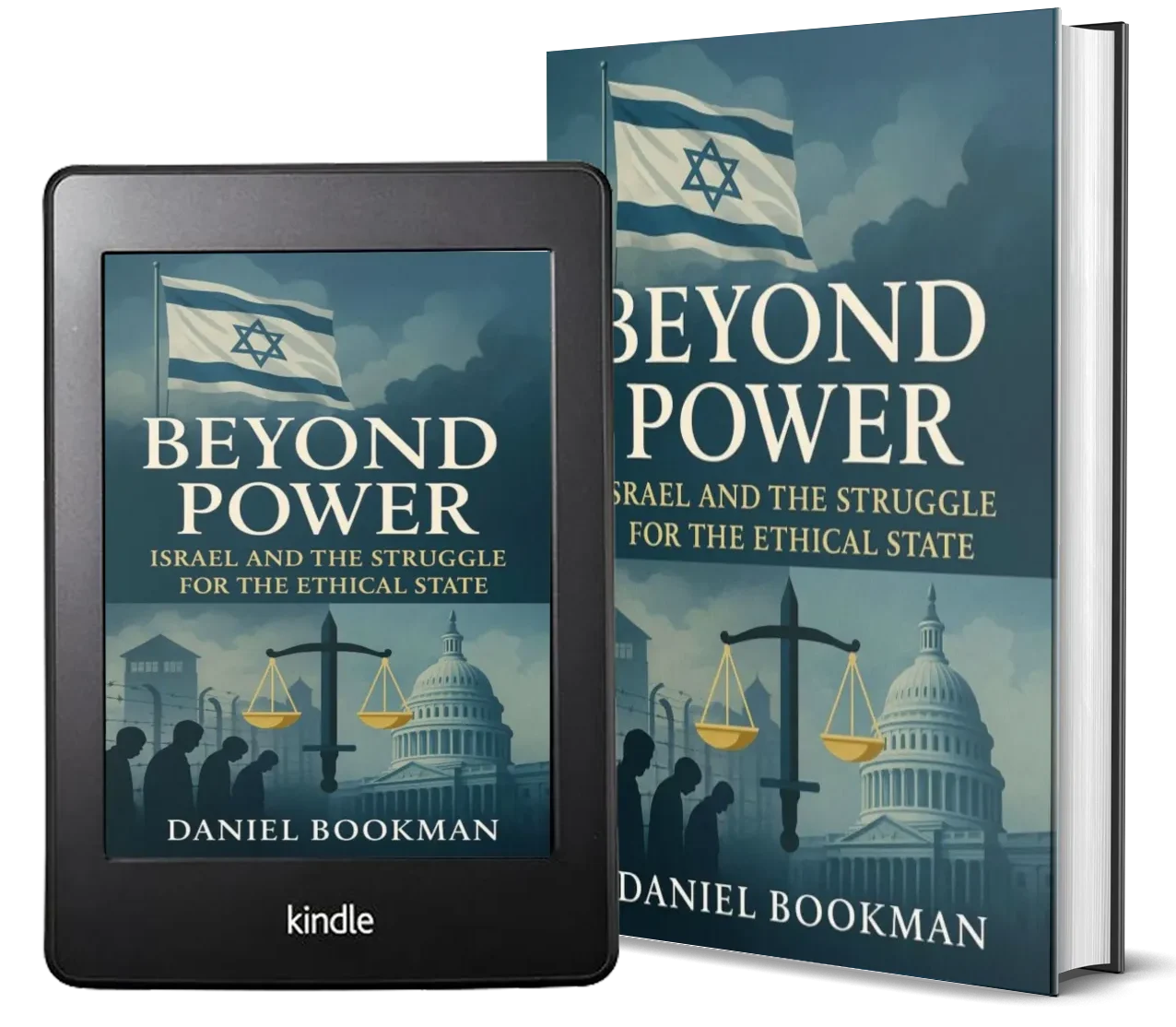
In Beyond Power: Israel and the Struggle for the Ethical State, Daniel Bookman addresses how historical accusations are often deployed selectively in discussions of contemporary conflict
His analysis suggests that when historical analogies are used as political tools rather than analytical frameworks, they obscure rather than illuminate.
Historical comparison requires discipline. It demands careful examination of intent, policy, scale, and context. Not every instance of discrimination is apartheid. Not every war with high civilian casualties is genocide. Not every security measure is colonialism. These terms have specific historical and legal meanings.
The temptation to reach for extreme analogies stems partly from the emotional power they carry. Modern media ecosystems reward immediacy and intensity. Social media algorithms amplify outrage. In such an environment, historical parallels become shorthand for moral condemnation. Nuance is crowded out.
Yet genuine historical analysis works differently. It distinguishes similarities from differences. It asks whether structural conditions align. It examines whether intent, mechanisms, and outcomes truly correspond. Without this rigor, analogy becomes propaganda.
There is also a broader ethical dimension. When societies repeatedly misuse historical comparisons, they weaken collective historical literacy. Future generations may struggle to differentiate between genuine genocides and ordinary warfare, between systemic racial regimes and political disputes. Historical memory becomes blurred.
Bookman’s broader argument emphasizes the importance of ethical restraint in political discourse
Just as states must exercise restraint in warfare, citizens and leaders must exercise restraint in language. Words shape perception. Perception shapes policy. When language escalates irresponsibly, so can action.
This does not mean history should be excluded from debate. On the contrary, history remains essential. It provides warnings about unchecked power, dehumanization, and ideological extremism. But historical comparison must be anchored in evidence and proportionality.
In an age of polarization, responsible discourse requires intellectual humility. Before invoking the gravest chapters of human history, one must ask whether the analogy withstands scrutiny. Does it clarify or merely condemn. Does it illuminate structure or inflame sentiment.
Historical memory deserves respect. When used carefully, it strengthens moral reasoning. When misused, it corrodes it. In modern political debate, the challenge is not to abandon historical comparison, but to restore its integrity.
Read this book, available on Amazon: https://www.amazon.com/dp/B0G1D4N83H/.