The attacks of October 7 marked one of the darkest days in Israel’s history. The brutality of the assault shocked not only Israelis but people around the world. Yet as the weeks passed, the public discussion shifted away from the violence itself and toward the nature of Israel’s military response. Was it justified? Was it moral? Was it proportional? These questions have echoed through news reports, political speeches, and international debates. To understand Israel’s position, it is necessary to step back and look at the events as they unfolded, as well as the difficult choices that followed.
On October 7, Hamas launched a coordinated and public massacre against Israeli civilians. Entire families were killed in their homes. Children, women, and elderly people were targeted. The attack was not a clash between armed fighters. It was a deliberate assault on ordinary people who were going about their lives. For Israel, the incident was not only a tragedy but a direct challenge to the basic expectation that a state must protect its citizens. When a government is responsible for the safety of millions, it cannot ignore an attack of this scale.
Since that day, Israel has described its actions in Gaza as a preventative defensive war. The goal, according to Israeli leaders, is not only to respond to what has happened but to prevent it from happening again. Critics have questioned whether the response has been disproportionate. Images of damaged neighborhoods in Gaza, injured civilians, and struggling hospitals fill news screens and social media. These visuals have contributed to a rising wave of global anger. Some of that anger is directed at Israeli policy, and some of it has crossed the line into open antisemitism.
Israel maintains that the civilian toll in Gaza is not the result of disregard but of harsh reality. Hamas operates within civilian areas, storing weapons and building infrastructure in places where people live, study, and receive medical care. This makes any attempt to dismantle its military network deeply difficult. Israel also disputes the casualty numbers, since the primary source is Hamas itself, which has political motivation to inflate figures. Still, there is no question that the situation is tragic for the residents of Gaza who find themselves caught between a terrorist organization and a nation determined to defend itself.
The heart of the debate rests on a simple but painful question. Even if Israel is justified in responding, can the loss of life be morally defended? Many people around the world feel unsure or say no. Israel replies that it has no other real option. To ignore the threat would leave its citizens vulnerable to future attacks. Hamas stated clearly and publicly that it intended to repeat the events of October 7. In that light, Israel views military action as essential, not optional.
Understanding Israel’s reasoning requires looking at three forces that shape any response to violence: justice, revenge, and deterrence. Justice demands that those responsible for the massacre should not be free to act again. Revenge is the emotional reaction to pain, fear, and humiliation. Deterrence looks ahead and tries to prevent the next tragedy. These motivations overlap, and critics often confuse them. They argue that Israel is acting out of revenge, but this ignores the role of deterrence. If Hamas or any similar group believes that attacks of this nature will not bring severe consequences, there is little reason to stop.
This leads to the question of proportionality. Many people think proportionality means matching the number of casualties on each side. But proportionality, in military ethics, refers to the scale of escalation. Before October 7, there was no major war underway. When Hamas took the conflict from a tense but contained situation to widespread slaughter, Israel believed it was necessary to respond at a level that reflects that escalation. If it did not, then such acts would become acceptable tools for future enemies.
Israel argues that its goal is not destruction but the restoration of order, safety, and deterrence. It says that without a strong response, civil society itself becomes vulnerable to those who use terror as a strategy.
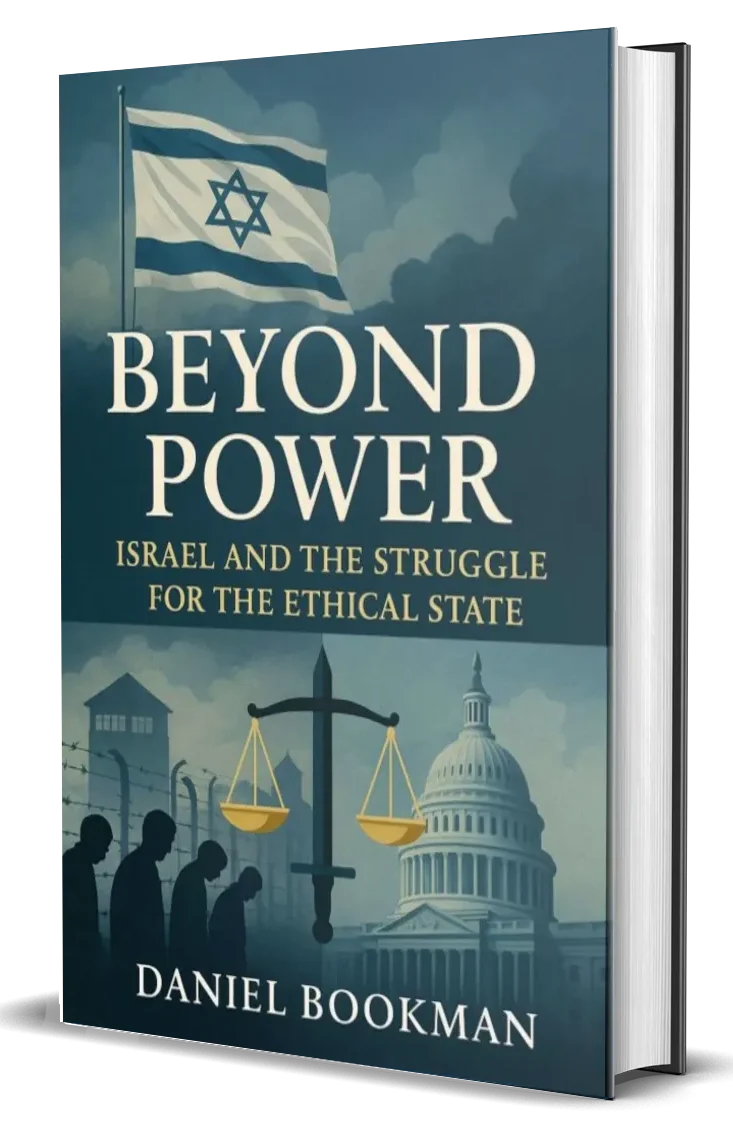
For readers who want a deeper and more balanced understanding of these issues, Beyond Power by Daniel Bookman offers a clear and thoughtful examination of the events, the ethics, and the wider meaning of Israel’s struggle. It is a valuable resource for anyone seeking a calmer and more structured view of a very difficult subject. Head to Amazon to purcahse your copy: https://www.amazon.com/dp/B0G1D4N83H/.